


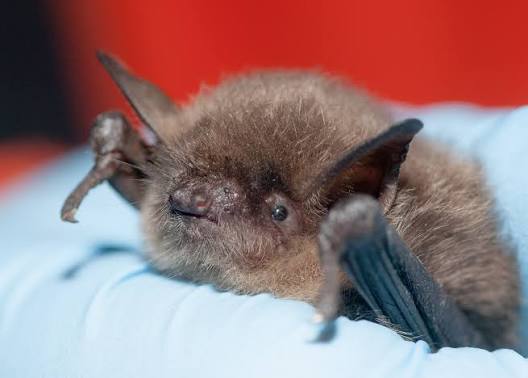
Yuma Myotis (Image Courtesy of Daniel Neal) [CC BY]
While we still wait for hibernation season to be over, I believe it is worth taking a closer look at a few of our local bat species that will be feasting on our pest insects this spring. Bats are our friends, and they do so much to improve our city’s ecosystem. While bat appreciation online is largely limited to the more puppy-faced megabats, I’ve always had a soft spot for microbats, especially the itty bitty ones!
The smallest bat in our local area is the California myotis (Myotis californicus). Despite its name, it is not only found in California; It is also found in the surrounding area: their population distribution extends southward into Mexico and even into western British Columbia. It is among the smallest of bats, not just in Washington, but throughout North America as well. They weigh only 3-5 grams and have a wingspan of around 8.5-9 inches. The bat’s size is actually considered an advantage: it is able to feed off very small insects that other species may miss. The small size of their prey means they often seek out large concentrations of insects, usually over water, within canopies, and along forest margins. Their slower, highly maneuverable flight combined with high-frequency echolocation calls allow them to detect and catch prey at very close ranges.
They form smaller maternity colonies of 20 or fewer and generally prefer to roost in smaller groups or on their own, especially outside of pupping season during May-June. It roosts in forested areas (like loose tree bark and tree crevices) and caves and tends to change roosting sites frequently, especially during the summer months. In the Puget Sound region, the California myotis does not always hibernate - the (relatively) warm nights allow them to find prey even during the winter. However, when they do hibernate, they often take shelter in abandoned buildings, caves, and mines.
Almost as diminutive is the Yuma myotis - It occupies a similar territory as the California myotis, extending south into Mexico and north into Canada, albeit not quite as far. With an average weight of 4-6 grams and a wingspan of 8.5-9.5 inches, they are just barely larger than the California myotis. They also hunt in a similar fashion, using slow, more maneuverable flight to hunt down their prey. Yuma myotis are never far from water: They roost near rivers or lakes, and in fact they prefer to catch insects as they enter and exit waterways. Yuma myotis are not picky - they are opportunistic feeders that eat whatever they can catch.
Yuma myotis are more sociable and form larger maternity colonies of a few thousand individuals, and generally roost in groups. They seek out caves, rock crevices, mines, hollow trees, and bridges to roost in. When it comes time to hibernate in late October, they prefer the isolation of caves and lava tubes, and hibernate until March. Tragically, their more sociable nature renders them more susceptible to white-nose syndrome, and their first reported case occurred in May 2017, right here in Washington state; alongside two little brown bats, two Yuma myotis were found infected with the fungus at Mount Rainier National Park.
While these two bats are small, their impact on the city surrounding us is large and cannot be understated. As we enter into spring, and our bats return from hibernation, I would like to emphasize appreciation and thankfulness for one of the most important animals in our ecosystem. Perhaps it is time to adventure out at dusk and see if you can catch one of these beautiful creatures in flight!